Long perceived as a sector reserved for large municipal aquatic centres, collective-use swimming pools in fact cover a much broader market. Public swimming pools, municipal pools, campsites, hotels, tourist residences, holiday villages, holiday cottages and public-access facilities: all of these represent facilities to be built, renovated, modernised, maintained and adapted to new uses.
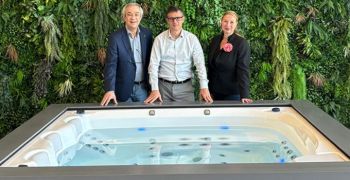
At its press conference on 5 May 2026, the French Federation of Pool and Spa Professionals (FPP) highlighted the strategic importance of this market for the industry. Beyond private residential pools, the collective-use swimming pool sector now represents a real development opportunity for professionals, with significant needs in energy renovation, water treatment, air handling, safety, accessibility, maintenance and sustainable operation solutions.
The market for public and collective-use swimming pools, an opportunity for the industry
For pool builders, manufacturers, distributors and equipment suppliers, the collective-use swimming pool market remains a largely open field of development. Between the renovation of the public pool stock, the move upmarket in tourist accommodation, energy requirements, safety, water treatment, automation and new uses, the needs are numerous and concrete. This market calls for technical solutions, field expertise and partners capable of supporting both local authorities and private operators over the long term.
An ageing public pool stock to renovate
France has around 4,100 public swimming pools, representing nearly 6,500 pools and 1.6 million m² of aquatic surface area. However, this network remains insufficient: the national ratio stands at around 130 m² of water surface area per 10,000 inhabitants, compared with a reference level estimated at around 170 m². The shortfall is estimated at around 200,000 m² of water surface area, equivalent to 400 25-metre pools.
The FPP also points to significant regional disparities. More than one third of intermunicipal authorities have no swimming pool provision, while one third only offer a seasonal facility. At the same time, the existing pool stock is ageing: one public swimming pool in two is said to be more than 38 years old, and a large proportion of facilities date back to the "1,000 pools" programme launched in the late 1960s and 1970s.
This ageing infrastructure has a direct impact on operating costs. Water and energy expenses now account for 25 to 30% of the costs of a collective-use swimming pool. In this context, energy renovation and technical modernisation are becoming priorities in order to contain costs, secure operations, extend the lifespan of facilities and reduce environmental impact. Support schemes can also help this transformation, particularly through subsidies from the French National Sports Agency, conditional on energy-saving targets, as well as local aid that can be mobilised by local authorities.
For pool professionals, these challenges open up a major field of intervention: improving energy performance, optimising water treatment, air handling, covers, control systems, digital solutions, maintenance, safety and regulatory support, particularly within the framework of the French Éco Énergie Tertiaire scheme, which requires energy consumption reductions of 40% by 2030, 50% by 2040 and 60% by 2050.
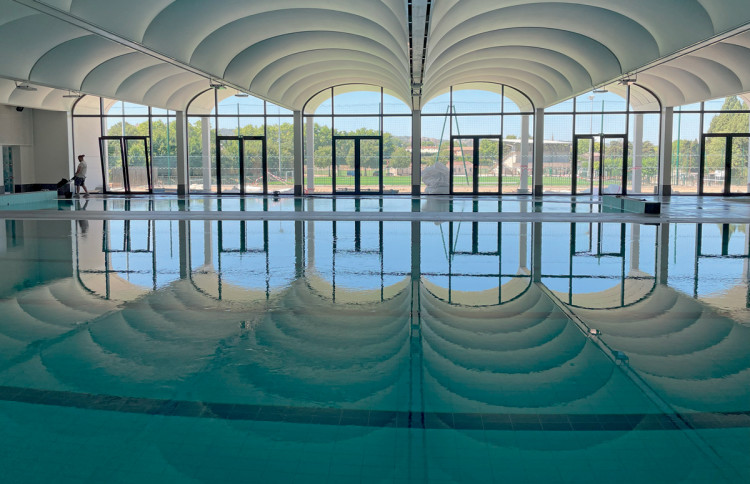
Saint-Rémy-de-Provence municipal swimming pool, renovated by Eau Air Système and Fluidra
Tourism and accommodation: a development opportunity
Collective-use swimming pools are not limited to public facilities. They also include private pools for collective use, particularly in the tourism sector. Campsites, hotels, holiday cottages, tourist residences and holiday villages are increasingly integrating aquatic facilities into their offer to enhance their appeal.
According to figures presented by the FPP, France has 7,418 campsites, 51% of which are already equipped with a swimming pool. The equipment rate reaches 92% for 4-star campsites and 97% for 5-star campsites, confirming the direct link between classification, quality of hospitality and aquatic facilities. However, this market still holds significant potential, as almost half of the stock remains to be equipped.
The potential also concerns the 2,290 tourist residences, 885 holiday villages and 16,850 hotels identified, 4,500 of which currently have a swimming pool. In these establishments, the pool has become a real lever for differentiation, moving upmarket and generating economic value.
Expectations are also changing: heated pools, water play areas, wellness zones, comfort equipment, safety, water and energy savings, and continuity of operation during drought periods. All of these needs call for suitable technical responses and professional support.
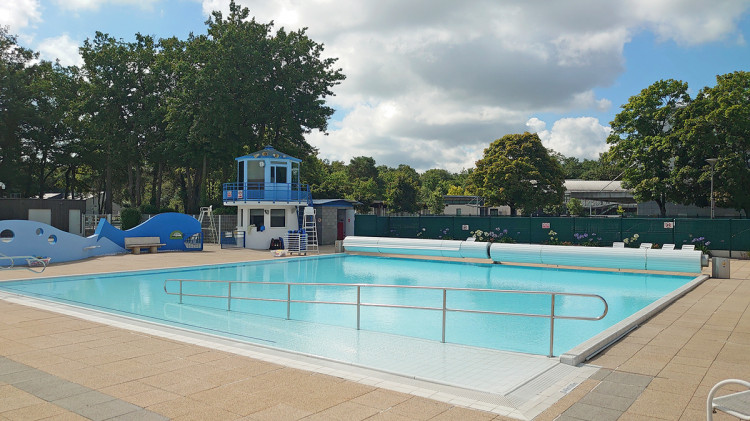
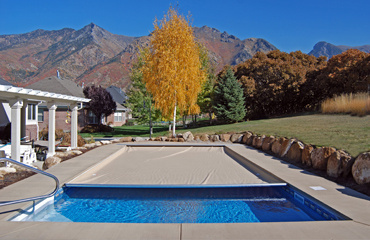
Collective-use swimming pool equipped with two Abriblue covers from the Nextpool group
A market to invest in for manufacturers, distributors and pool professionals
For pool professionals, the market for public facilities and collective-use pools requires a structured approach, but it offers many opportunities. The needs do not only concern the construction of new facilities. They also include renovation, compliance upgrades, operation, maintenance, equipment replacement, energy optimisation and improvement of the user experience.
We are convinced that the FPP must be the federation for pools, both public and private, because there is strong potential, expertise to bring, and there is no one better than our professionals to provide that expertise. - Stéphane Figueroa, President of the FPP
The FPP emphasises the role that specialist companies can play with local authorities, operators and tourist accommodation providers. Their field knowledge, intervention capacity, responsiveness and technical expertise are key assets in supporting projects that are often complex and subject to budgetary, regulatory and environmental constraints.
70% of the stock is ageing and 30% of the country has no collective swimming pool facility. There was therefore a real challenge for all professionals. As a trade fair reflects a market, we had to address this topic extensively at the next Piscine trade fair. We wanted to launch a very strong theme around the Aqualie brand. - Alexandra Moncorgé, Director of Piscine Global
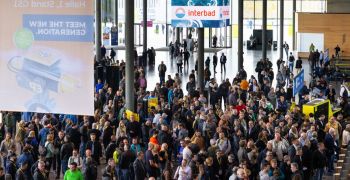
The relaunch of Aqualie, a day dedicated to collective-use swimming pools organised on 19 November as part of Piscine Global 2026, further confirms the growing importance of this subject within the industry. Energy renovation, reduced water and energy consumption, financing, sustainable operation, accessibility, safety and eco-responsible innovation will be among the topics addressed.
To support this momentum, EuroSpaPoolNews will also dedicate its Spécial PROS Collectivités 2026 special issue, to be published in September, to the equipment, solutions and innovations designed for public swimming pools, collective-use pools and facilities open to the public. This dedicated edition will showcase the companies wishing to strengthen their visibility in this fast-changing market. Would you like to reach the players in the French public and collective-use swimming pool market? To advertise in this issue or receive it free of charge, contact us.